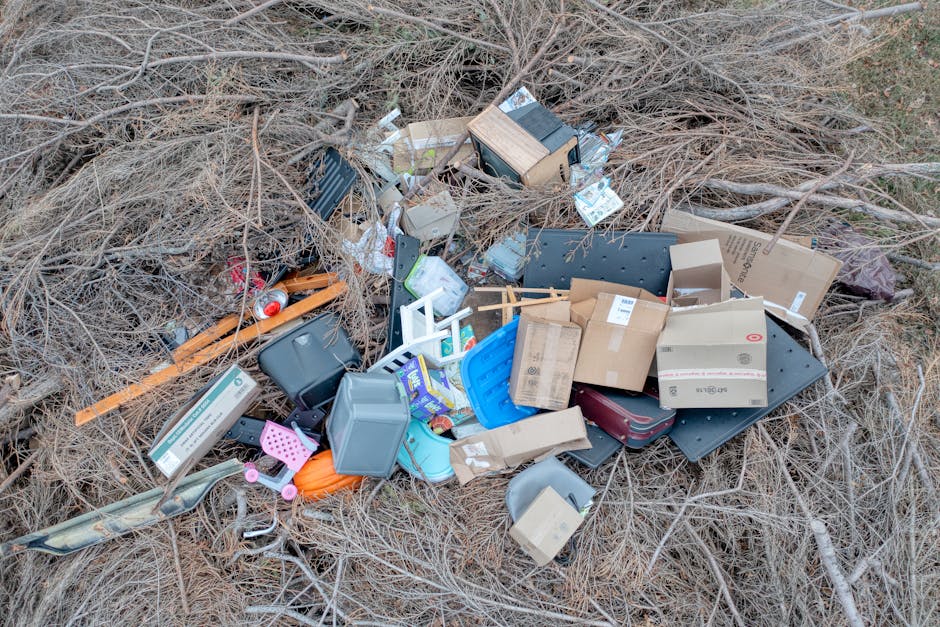
Haringey Council bulky waste disposal fines explained for Harringay
If you live in Harringay and you've got an old sofa, broken wardrobe, mattress, fridge, or a couple of heavy items sitting by the door, it's easy to think, "I'll sort it later." Truth be told, that delay is where people often get caught out. This guide to Haringey Council bulky waste disposal fines explained for Harringay breaks down what the fines usually relate to, how bulky waste rules are generally enforced, and what you can do to avoid an expensive mistake.
The aim here is simple: help you understand the difference between lawful disposal and fly-tipping, what council teams tend to look for, and how to choose a cleaner, safer option for getting rid of large household items. You'll also find a practical checklist, a comparison table, and a realistic example so you can act before things become a nuisance. Let's face it, nobody wants a fine for a sofa that could have been removed properly in an afternoon.
For local households and landlords alike, the biggest risk is not always the item itself. It's the way it's left, where it's left, and whether it's passed to someone who isn't properly handling waste. If you're also planning a wider clear-out, services like furniture pick-up, mattress and sofa disposal, or fridge and appliance removal can be part of a much safer approach.
Table of Contents
- Why this matters in Harringay
- How bulky waste fines and disposal work
- Key benefits of doing it properly
- Who needs this guidance most
- Step-by-step guidance
- Expert tips for avoiding problems
- Common mistakes to avoid
- Tools, resources and recommendations
- Law, compliance and best practice
- Options and comparison table
- Real-world example
- Practical checklist
- Conclusion
- Frequently asked questions
Why Haringey Council bulky waste disposal fines explained for Harringay Matters
Bulky waste is one of those things people underestimate. A single item can feel harmless. Two items become a hallway blockage. Three items and a missed collection slot can turn into a neighbour complaint or a pile left outside on the pavement. In a dense part of London like Harringay, that matters more than most people realise.
Bulky waste problems often sit at the crossroads of convenience, hygiene, and responsibility. If waste is left where it shouldn't be, it can attract complaints, create access issues for pushchairs and wheelchairs, and make a street look neglected. That is exactly why councils take enforcement seriously. Not because they want to be awkward, but because unmanaged waste spreads quickly and creates a mess for everyone else.
The phrase "bulky waste disposal fines" usually covers a few different situations. Sometimes it's about leaving items out without arranging a proper collection. Sometimes it's about handing waste to someone who dumps it elsewhere. Sometimes it's about trying to dodge proper disposal charges by leaving items next to a bin, beside a wall, or on a verge. That last one is the classic "it'll be fine" move. It usually isn't.
In practical terms, if you're moving house, replacing furniture, or clearing a rented property, the safest route is to plan the disposal before the deadline hits. If you are already in the middle of a move, it can be worth combining disposal with broader help such as home moves support or a more flexible man and van service, especially when timing is tight and the lift is doing its usual awkward little dance.
There's also a trust issue. Once bulky waste leaves your control, you need to know it has been handled properly. That is why businesses and households alike should look carefully at disposal arrangements, especially for mixed loads, appliances, and items containing glass, gas, or electrical components.
Expert summary: In Harringay, the safest approach is simple: don't place bulky items on the street unless a proper collection has been arranged, and never assume someone else will "take it away for you" without checking how they dispose of it.
How Haringey Council bulky waste disposal fines explained for Harringay Works
Let's keep this plain. Councils generally enforce waste rules through inspections, complaints, evidence from residents, and signs of unlawful dumping. If a bulky item is abandoned in a public place, it may be treated as fly-tipping or as a waste offence depending on the circumstances. If waste is left outside your property, on a shared path, or near communal bins without permission or collection arrangements, that can also cause problems.
What triggers a fine? Usually one of these:
- leaving bulky items on the street or pavement without a lawful collection
- putting household items next to a bin because they do not fit inside
- handing waste to an unlicensed operator or a "man with a van" who then dumps it
- failing to keep evidence of who removed the waste
- placing prohibited or hazardous items in the wrong stream
For Harringay residents, the practical issue is that a normal-looking clear-out can become an enforcement matter very quickly. A mattress on the pavement at 7am might look like a disposal attempt to you, but to someone else it may look like abandoned waste. And once that impression is there, the process gets harder to undo.
If you're organising removal, it helps to think in two steps: collection and destination. Collection means who is taking the item. Destination means where it ends up. If you cannot explain both, you are not in a strong position. That's the honest version.
In real life, the cleanest solution is often to use a service that can remove and transport items in one go, whether that's for a single sofa or a mixed load from a flat, garage, or office. If the job includes heavy lifting or awkward access, options like moving truck support or removal truck hire can make a big difference. It saves time, and more importantly, it reduces the temptation to "leave it outside and hope."
There is also a practical side to compliance. Some items are simply not suited to casual disposal. Fridges, freezers, and certain appliances may need specialist handling. If you're not sure, a dedicated service like fridge and appliance removal helps reduce risk and keeps you away from the awkward middle ground where fines often happen.
Key Benefits and Practical Advantages
Doing bulky waste the right way is not just about avoiding a fine. It actually makes life easier. That sounds a bit obvious, but people usually feel the benefit once the job is done properly and the floor is clear.
- Less risk of enforcement: Proper disposal reduces the chance of a council complaint or penalty.
- Cleaner kerbside and communal spaces: Neighbours, landlords, and managing agents all notice when waste is handled responsibly.
- Less stress during a move: You are not juggling last-minute decisions on moving day.
- Better handling of awkward items: Heavy or fragile pieces are moved with less chance of damage.
- More predictable costs: Planning disposal usually beats scrambling after a problem has already happened.
There's also a quieter benefit: peace of mind. When bulky waste is gone and you know it has been dealt with properly, you stop worrying about whether someone is going to complain, photograph it, or report it. That little mental weight matters, especially during a move or a property handover.
Households that value sustainability may also prefer a route that supports recycling and responsible reuse. If that matters to you, it is worth looking at a provider's recycling and sustainability approach, especially when several items could be separated for better processing rather than bundled into a single mixed load.
Who This Is For and When It Makes Sense
This guide is useful for more people than you might think. It is not just for someone with a broken sofa and a warning letter waiting to happen.
- Tenants who are moving out and need to leave the property clear.
- Homeowners clearing old furniture after a refit or upgrade.
- Landlords and letting agents dealing with abandoned furniture or end-of-tenancy clearances.
- Families replacing bulky household items without a van of their own.
- Small businesses disposing of office furniture, fixtures, or archive clutter.
- Older residents or busy professionals who simply do not want the headache of loading and transport.
It makes sense whenever the item is too large for household bins, too heavy to carry safely on your own, or too awkward for normal refuse collection. It also makes sense when the item is time-sensitive. For example, if you are handing back keys on Friday afternoon and the mattress is still in the spare room, you need a proper plan, not optimism.
For larger moves, the same logic applies. Combining bulky item removal with house removalists or packing and unpacking services can prevent waste from becoming the thing that ruins a fairly smooth move. And yes, it happens more often than people admit.
Step-by-Step Guidance
If you want to avoid fines and get bulky waste out of the way, a simple process works best. No drama. Just a clear sequence.
- Identify every item. Walk through the space and make a list. Include furniture, appliances, and anything that might be mixed into the load.
- Separate normal waste from bulky waste. Small rubbish, recyclables, and bulky items should not be treated the same way.
- Check what needs special handling. Fridges, freezers, mattresses, sofas, and hazardous items may need specific disposal arrangements.
- Decide what can be reused, donated, or recycled. Not everything needs to go to disposal. Some items still have life in them.
- Choose a lawful collection method. That might mean council bulky collection, a private removal service, or another approved route.
- Keep proof. Save the booking confirmation, invoice, and any details about collection time and destination.
- Do not leave items out early. Put them out only when collection timing allows it.
A lot of people skip step six, and then regret it. If an item vanishes and later turns up dumped somewhere, proof that you arranged disposal properly can be very useful. It is dull, yes, but extremely practical.
If you are unsure how to move the load from the flat to the vehicle, a local man with van arrangement can be a sensible middle ground. It is often easier than trying to recruit family members, a borrowed hatchback, and two wobbly trips down the stairs. We've all seen how that goes.
Expert Tips for Better Results
Here are the little things that make a big difference.
- Take photos before the collection: Useful for your own records if there is any later dispute.
- Label mixed items clearly: Especially if you are separating reusable furniture from rubbish.
- Measure large pieces: Doors, stairwells, and tight hallways can become the real obstacle.
- Ask about handling methods: If your item includes glass, refrigerant, or sharp edges, you want to know how it will be moved.
- Book in advance where possible: The best time slots disappear quickly around weekends and month-end.
- Choose a provider that explains the process clearly: Vague answers are not a great sign.
One small but important tip: never assume "someone will probably take it." That's how waste ends up in the wrong place. Better to spend ten minutes checking than ten days chasing the aftermath.
If your disposal job overlaps with a bigger move, a flexible transport option like man and van can save the day. Particularly for one-off clearances, it can be more efficient than trying to coordinate several separate services.
Common Mistakes to Avoid
This is where people get caught out. The mistakes are often small, which is almost annoying. But they add up.
- Leaving bulky waste on the pavement too early because you are trying to be organised.
- Using an unverified collector who gives a cheap price but no clear disposal trail.
- Mixing hazardous or electrical waste with general furniture without asking what should be separated.
- Assuming the council will remove anything, anytime without checking rules or availability.
- Failing to keep receipts or booking records after collection.
- Forgetting about building rules in flats, HMOs, or managed blocks.
A common scenario in Harringay is the late-stage clear-out. The move is tomorrow, the item is too heavy, the lift is busy, and someone says, "Let's just put it by the bin for now." That sentence has caused more problems than it deserves to. Better to stop, breathe, and arrange the right removal.
When the waste includes larger household pieces, a dedicated disposal service can be less hassle than trying to improvise. If you are clearing a sofa or bedroom set, services like mattress and sofa disposal are built for exactly that kind of job.
Tools, Resources and Recommendations
You do not need fancy equipment to handle bulky waste properly, but a few practical tools make the process easier.
- Measuring tape: Helpful for bulky furniture and access checks.
- Mobile phone camera: Good for photo records before and after collection.
- Gloves and sturdy shoes: Useful for moving items around safely.
- Booking confirmation or written instructions: Keep this in one place.
- Basic inventory list: One sheet or note app is enough.
For more complex disposal jobs, especially where lifting, transport, and sorting are involved, it is worth using a company that is transparent about safety, payment, and service terms. Pages like health and safety policy, insurance and safety, and payment and security can help you understand how seriously a provider treats the basics.
If you want to understand pricing before you commit, look for clear cost information rather than guessing. A straightforward pricing and quotes page is usually the right place to begin.
Law, Compliance, Standards, or Best Practice
This topic sits in a legal and practical grey zone for many residents, so careful wording matters. In the UK, waste must generally be disposed of responsibly, and if you hand it to a third party, you should be confident they are legitimate and that the waste is being managed properly. That is the core principle. If waste ends up dumped, the person who arranged the disposal may still face questions.
For day-to-day purposes, the best practice standard is simple:
- do not place waste in a public area unless collection has been arranged correctly
- do not use someone you cannot verify
- do not treat a street corner as a temporary storage space
- separate hazardous or specialist items from normal bulky waste
- keep evidence of collection and payment
In shared housing, managed blocks, and commercial premises, there may be additional site rules. Those rules can matter just as much as council expectations. If the property is part of a business relocation, then disposal should be tied into the wider move plan, which is where services such as commercial moves or office relocation services can be useful.
Best practice also means being honest about what you are moving. A broken office chair is not the same as a filing cabinet full of confidential papers, and neither is the same as a fridge. If confidential material is involved, you may need a separate process, which is why confidential shredding is relevant in some clear-outs.
Options, Methods, or Comparison Table
There are a few ways to deal with bulky waste. Each has its place, but not all of them suit every situation.
| Option | Best for | Pros | Watch out for |
|---|---|---|---|
| Council bulky waste collection | Single or few household items | Simple, familiar, usually suitable for standard items | May have booking limits, item restrictions, or waiting times |
| Private bulky waste removal | Urgent jobs, mixed loads, awkward access | Flexible timing, collection from inside the property, faster turnaround | Choose a provider carefully and confirm disposal standards |
| Reuse or donation | Good-condition furniture or appliances | Can reduce waste and keep useful items in circulation | Items must be clean, safe, and actually reusable |
| Self-haul to a waste facility | People with suitable transport and time | Full control over timing and sorting | Heavy lifting, vehicle limits, and trip effort can be a lot |
For many Harringay households, the best choice depends on time, access, and item type. If you need the simplest route for one sofa, one mattress, and a couple of small extras, a collection service is usually easiest. If you are emptying a whole flat, a broader removal solution is often more sensible.
There is no gold medal for doing it the hardest way. Honestly, there isn't.
Case Study or Real-World Example
Here's a realistic example. A couple in Harringay were moving out of a first-floor flat and had three bulky items left at the last minute: a wardrobe, a mattress, and an old fridge. The move was on a Friday, the lift was small, and the fridge had started to smell a bit like damp cardboard and old milk, which nobody wanted to deal with twice.
At first they considered leaving the items outside overnight so they could "deal with it in the morning." That would have been risky. Instead, they booked a same-week collection and planned the disposal alongside the rest of the move. The items were removed in one go, the hallway stayed clear, and there was no awkward apology note to the neighbours. Very small win, but a win all the same.
The useful lesson here is not that every collection is identical. It is that timing matters. When bulky waste is part of a move or clearance, the best approach is usually to handle it before the final handover rush. That gives you more control and fewer surprises.
Practical Checklist
Use this before you leave anything out for collection or hand items to a remover.
- Have I listed every bulky item?
- Do any items need special handling?
- Do I know exactly when collection is happening?
- Do I know who is taking the waste and where it is going?
- Have I kept a receipt, message, or booking confirmation?
- Is anything being left in a public area too early?
- Are there building or landlord rules I need to follow?
- Have I separated reusable items from rubbish?
- Would a furniture, appliance, or mattress-specific service be better?
- Am I confident the disposal route is lawful and sensible?
If you tick all ten boxes, you are in a much better position. If you only tick three, that's your sign to pause and sort it properly.
Conclusion
Haringey Council bulky waste disposal fines are usually avoidable when you plan ahead, keep items off the pavement unless a proper collection is arranged, and use a disposal route you can actually trust. In Harringay, where streets are busy and space is tight, the small mistakes are the ones most likely to cause trouble.
What matters most is simple: know what you are disposing of, know who is taking it, and keep proof. Whether you are clearing a single sofa or tidying up after a move, doing it properly saves money, time, and a lot of avoidable stress. And if you want the process to feel lighter, choosing the right kind of help makes all the difference.
Get a free quote today and see how much you can save.
Sometimes the best kind of clean-up is the one that quietly removes the problem before anyone even notices there was one.
Frequently Asked Questions
What counts as bulky waste in Harringay?
Bulky waste usually means large household items that do not fit in normal bins, such as sofas, mattresses, wardrobes, tables, fridges, and similar oversized pieces. The exact treatment depends on the item and how it needs to be handled.
Can I leave bulky waste next to the bin if it will be collected soon?
That is risky. Leaving items out without the correct arrangement can be treated as abandoned waste or fly-tipping. It is safer to wait until the agreed collection time.
Will I be fined if someone else dumps my waste?
You could still face questions if you handed waste to an unverified person and it was dumped later. That is why keeping proof of who collected it, and confirming they are legitimate, is so important.
Are fridges and freezers treated differently?
Often, yes. Fridges and freezers can require special handling because of their components, so they should be removed using a service that understands appliance disposal.
Is it cheaper to use council collection or a private remover?
That depends on the number of items, your timing, and how difficult access is. Council collection can be fine for simple jobs, while private removal is often more flexible for urgent or awkward clearances.
What if I only have one item to get rid of?
One item can still cause a problem if it is left in the wrong place. A single sofa or mattress is still bulky waste and should be handled properly.
Do I need proof after my bulky waste is collected?
Yes, keeping confirmation is wise. A booking note, receipt, or message trail can be helpful if there is ever any dispute about what happened to the waste.
Can bulky waste be reused instead of thrown away?
Sometimes it can. If the item is clean, safe, and still usable, reuse or donation may be a better route. If not, disposal or recycling is usually the next step.
What should landlords do with abandoned furniture?
Landlords should document the condition of the property, identify what needs removal, and arrange lawful clearance. It is often better to use a service that can remove multiple items efficiently.
How do I avoid problems when moving house?
Plan waste removal before moving day, separate reusable items, book the right service early, and keep the access routes clear. If a move is already underway, combine disposal with the wider move rather than leaving it as an afterthought.
Can a man and van service help with bulky waste?
Yes, if the provider offers lawful removal and proper handling. It can be a practical option for mixed clear-outs, especially when you need a bit more flexibility than a standard collection slot.
What is the safest first step if I am unsure?
Make a list of the items, check whether any are hazardous or special-case items, and confirm the disposal route before moving anything outside. A few minutes of checking now can save a proper headache later.